AMAZON MINING WATCH / PANORAMA

QUARTELY REPORT / OCTOBER – DECEMBER 2025

Reserva Ecológica Cofán Bermejo / Provincia de Sucumbíos, Ecuador

Photo: Fundación EcoCiencia.

BREAKDOWN OF MINING DESTRUCTION IN KEY AMAZONIAN COUNTRIES

Hectares impacted by gold mining in Brazil
0
Hectares impacted by gold mining in Peru
0
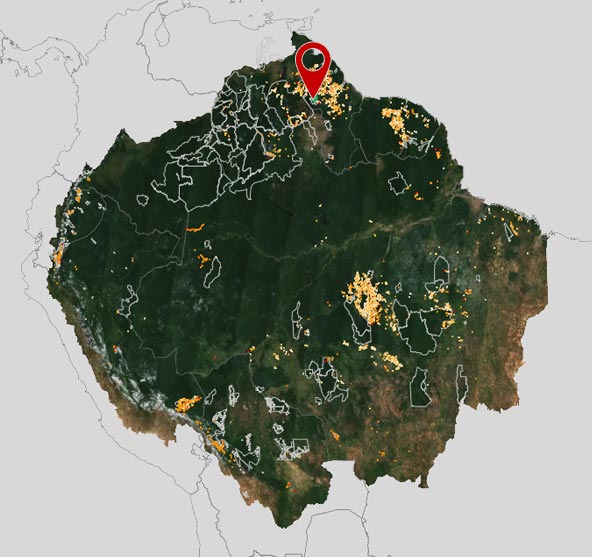
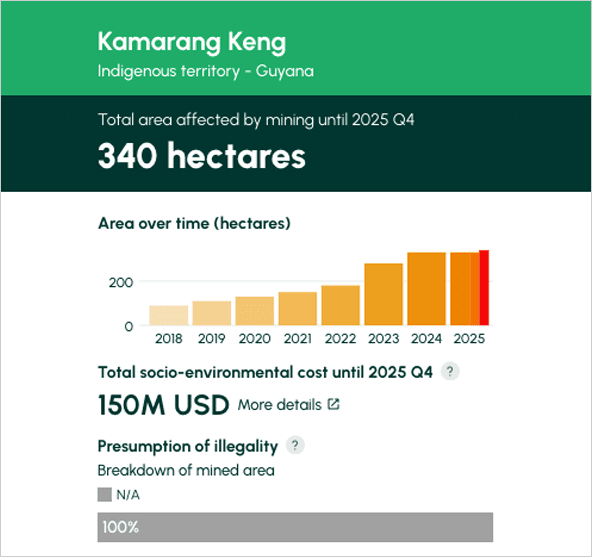
Hectares impacted by gold mining in Guyana
0

Other Countries (Bolivia, Colombia, Ecuador, French Guiana, Suriname, and Venezuela) totaled 1,400 hectares of forestsimpacted by gold mining activities.

Dispatch of the latest on gold mining impacts across the Amazon

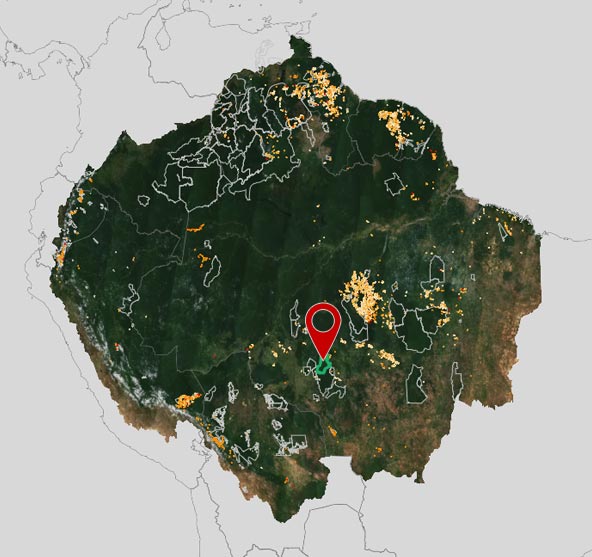
Amazon Mining Watch | Panorama provides critical insights into the escalating threat of illegal gold mining across the Amazon. Based on AI-powered detection of mining scars anywhere in the basin using Amazon Mining Watch (AMW), a multi-partner platform led by Amazon Conservation, Earth Genome, and the Pulitzer Center, Panorama reports provide a data-driven perspective on the environmental challenges facing the world’s largest rainforest.

panorama 02

Regional trends of gold mining-driven deforestation

Key findings from October to December 2025:

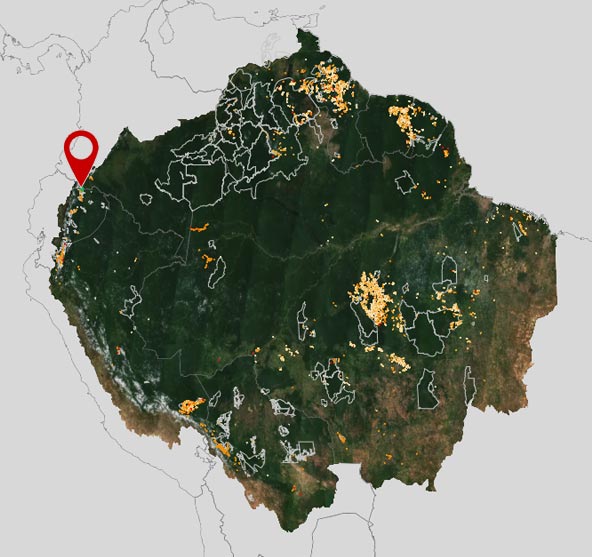
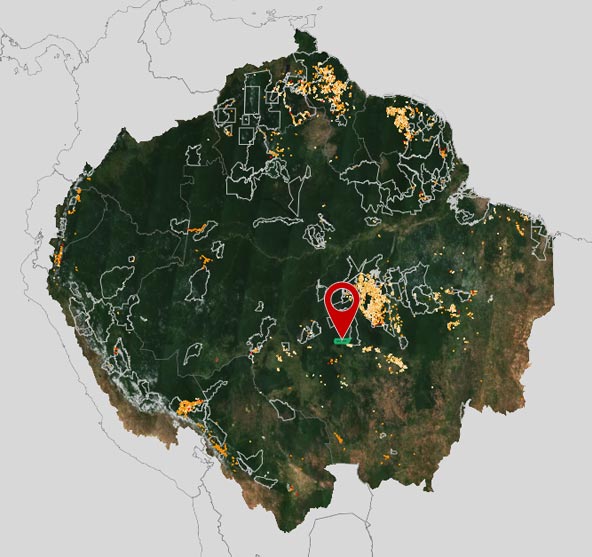
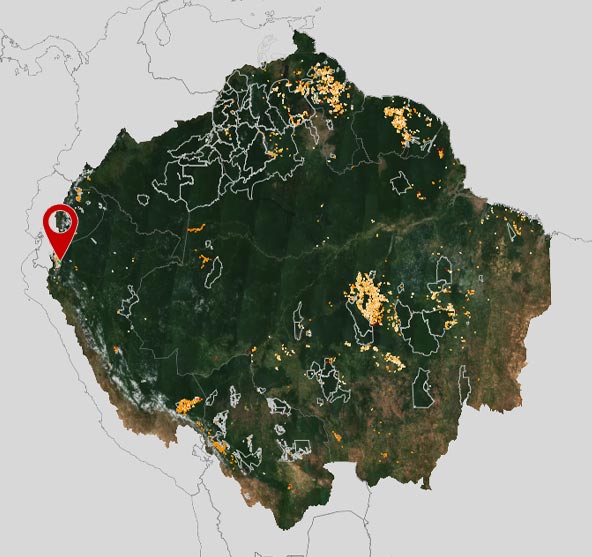
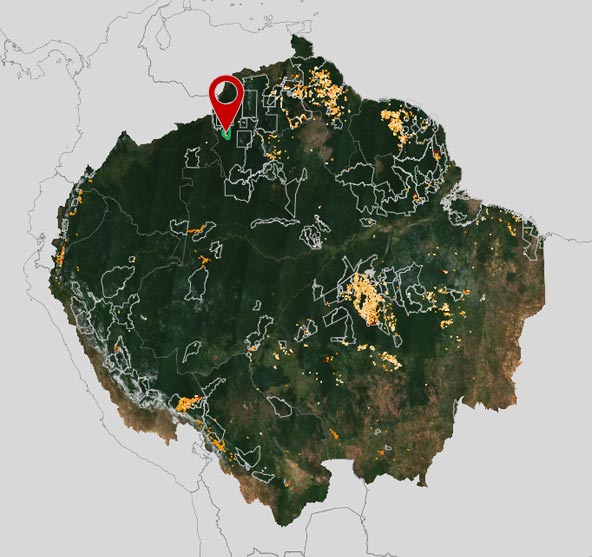
Gold mining expanded in all 9 Amazonian Countries impacting 6,000 hectares.

Brazil registered the largest recent (4th quarter) mining expansion area (2,000 ha), followed closely by Peru (1,700 ha) and then Guyana (900 ha).

In the middle tier are Venezuela (600 ha), Suriname (500 ha), Bolivia (300 ha), Ecuador (240 ha), and French Guiana (80 ha).

Colombia had the least new gold mining deforestation (10 ha), but does have an emerging issue related to illegal gold mining along the Pure River (see MAAP #228).

Amazon Mining Watch Panorama provides critical quarterly insights into the escalating threat of illegal gold mining across the Amazon. Based on AI-powered detection of mining scars anywhere in the region from Amazon Mining Watch (AMW), a multi-parner initiative led by Amazon Conservation, Earth Genome, and the Pulitzer Center, it offers a data-driven perspective on the environmental challenges facing the world’s largest rainforest.

Quarterly Panorama reports include information on the previus 3 months for:

    • Regional trends of gold-mining driven deforestation
    • New incursions into Protected Areas and Indigenous Territories previously untouched by mining
    • Cases of resurgence of mining in protected areas and indigenous territories
    • Protected areas and indigenous territories with persistent and accelerating mining deforestation

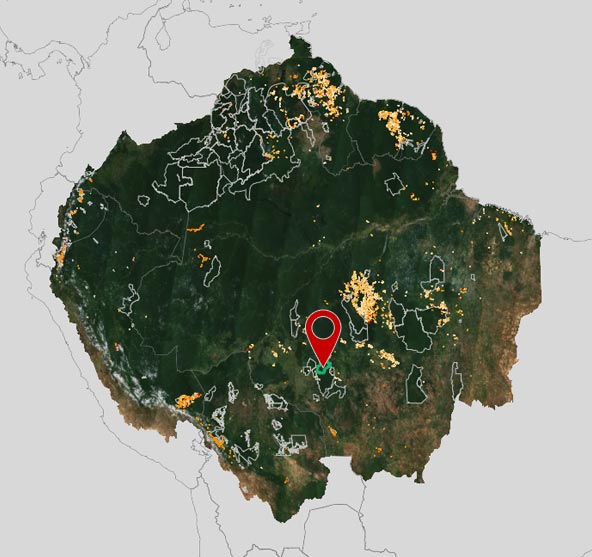
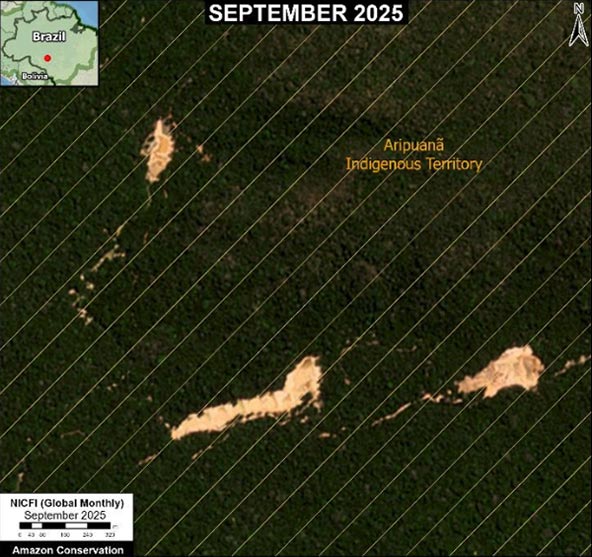
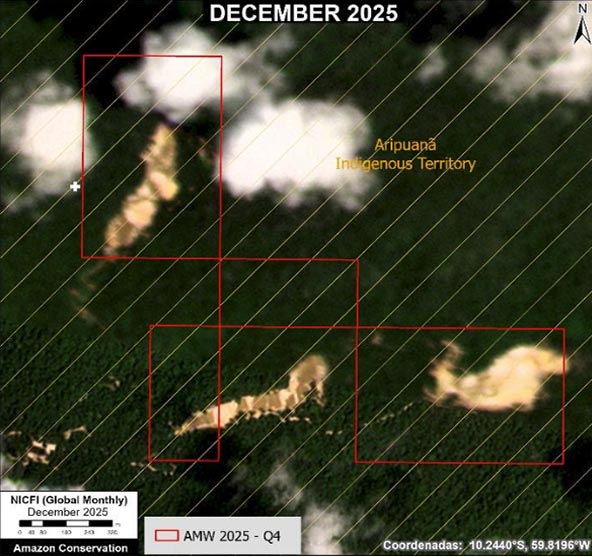
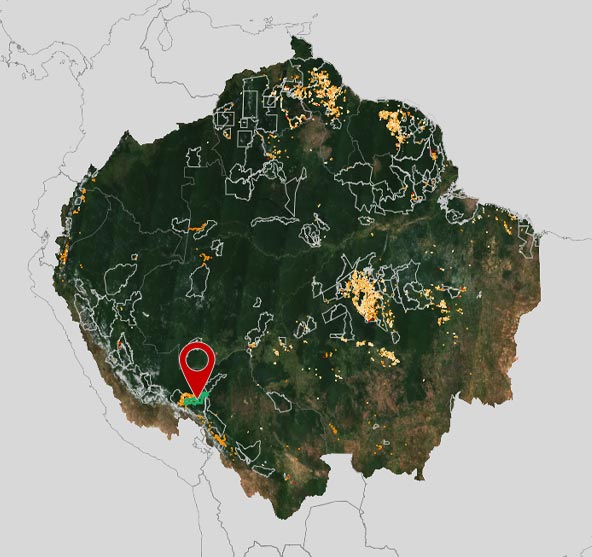
In this report, we present data on one (1) case of new incursion, five (5) cases of resurgence and four (4) cases of areas with persistent and accelerating mining-related deforestation. 

As gold prices continue to rise, timely detection of new expansion of mining areas through a consistent, wall-to-wall methodology can support a swift and coordinated enforcement response from authorities across borders.

NEW INCURSIONS ON PROTECTED AREAS OR INDIGENOUS TERRITORIES

This section lists areas with no mining detected since 2018 but where mining scars have been detected in the last quarter, highlighting totally new—and highly likely to be illegal—incursions in areas designated for conservation or indigenous territories.

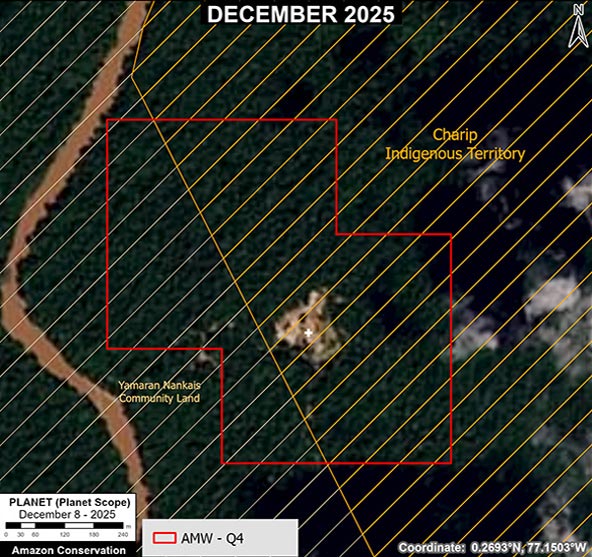
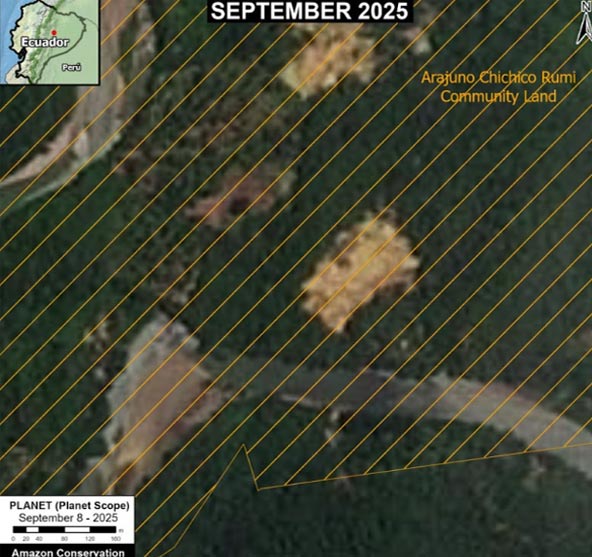
Detection polygons for each of these cases are visible on the Amazon Mining Watch geovisor, where the full time series of mining expansion since 2018 can be consulted. Where available, high-resolution Planet imagery is also provided, confirming the nature of the activity causing deforestation.

Under this category, only one new totally mining incursion was detected in the last quarter, across formally recognized indigenous territories and protected areas

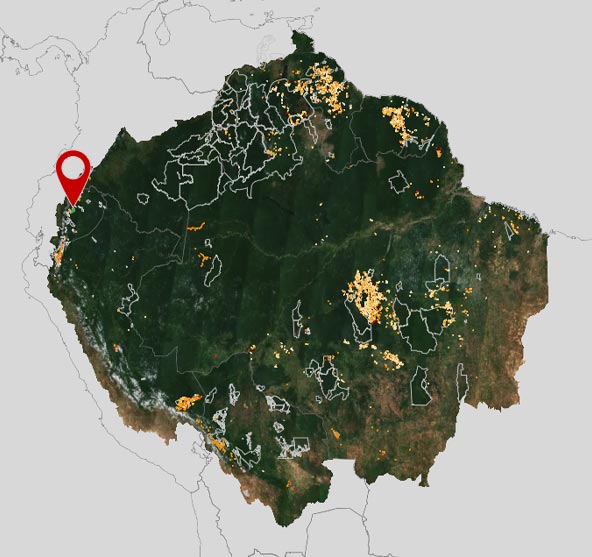
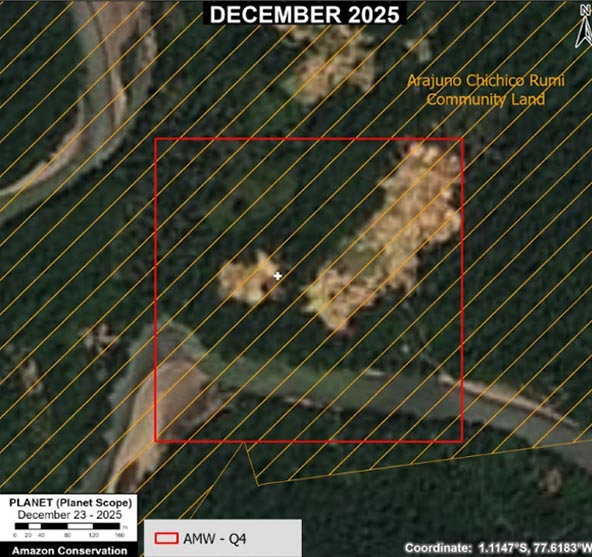
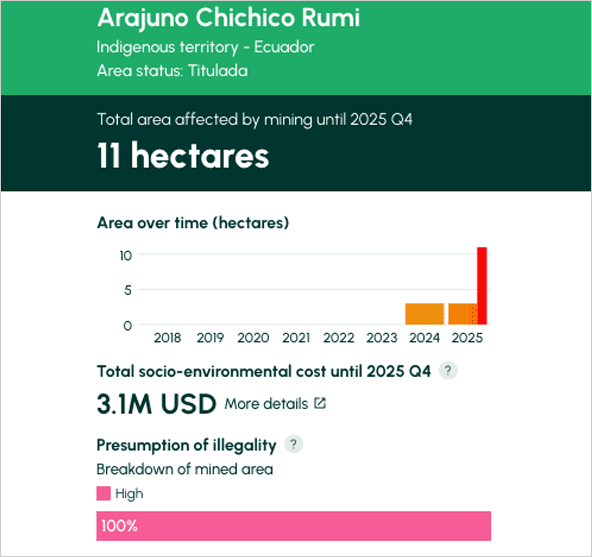
TERRITORIO CHARIP

(ECUADOR)

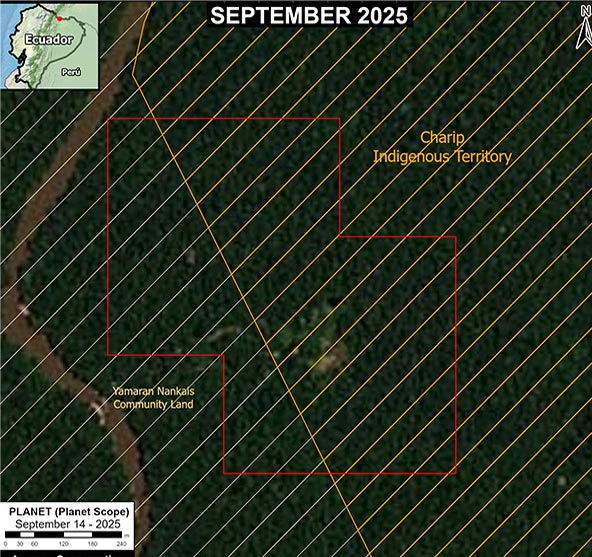
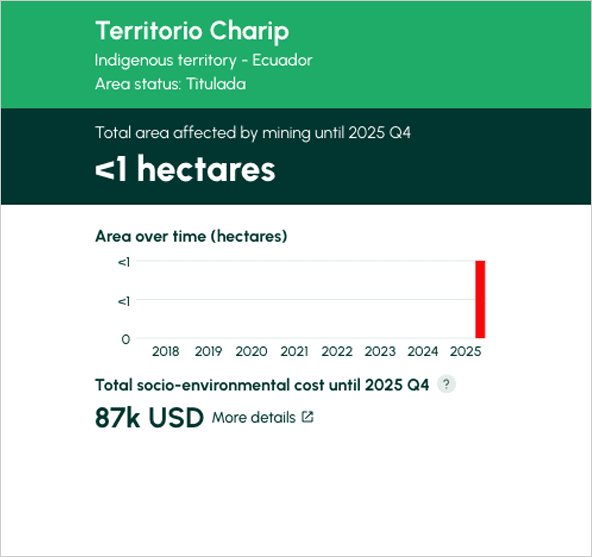
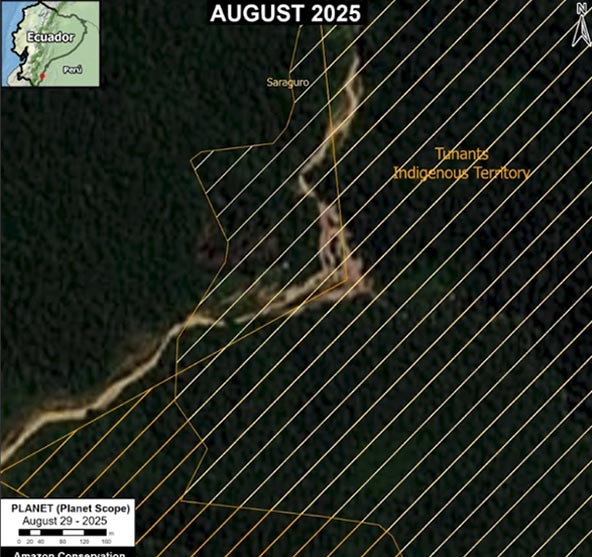
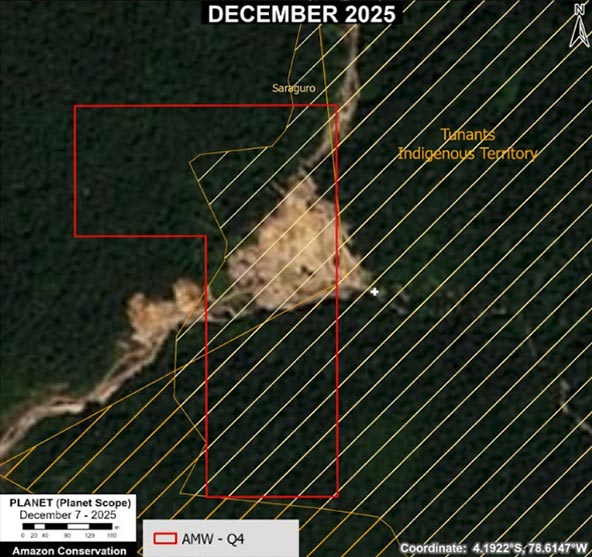
The Territorio Charip was officially recognized by the Government of Ecuador in 2025. It is designated as an Indigenous Territory titled under the stewardship of the Shuar people. Located in Sucumbíos Province, the territory safeguards vital lowland tropical rainforest within the Tropical Andes–Amazon transition zone, as well as critical headwaters that feed into the Aguarico and Putumayo River basins.

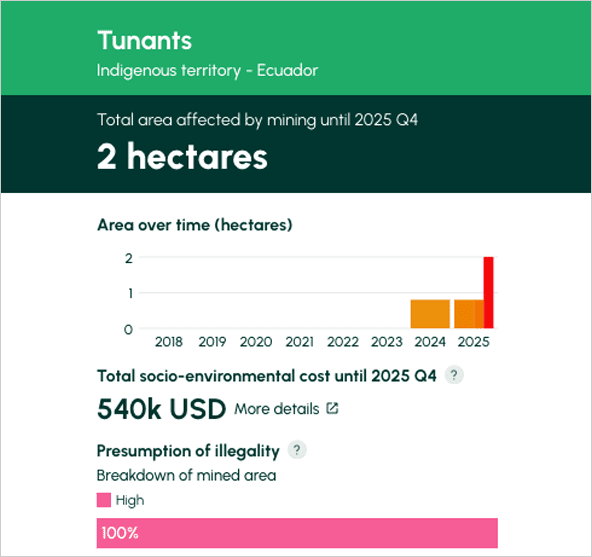
Mining update: The territory appears to have suffered from a small mining incursion in the last quarter, which would mark the first time that mining has occurred in the area, even prior to its designation.

CHARIP 1 CHARIP 2
logo.67ac9d00

Conclusion

The findings of this report reveal the continuous expansion of mining-related deforestation, encroaching upon protected areas and indigenous territories. The persistent and pervasive nature of this threat underscore the escalating crisis of illegal gold mining in the Amazon. Consistent, data-driven monitoring provided by Amazon Mining Watch Panorama is crucial for understanding the scope of the problem and to promote accountability. Amazon Mining Watch and its partners will continue to provide quarterly and yearly updates about trends in gold mining expansion in the Amazon, information about the presumed illegality of these activities and their estimated socioenvironmental impact.

Methodology of monitoring systems

For Amazon Mining Watch, the mine detector is an artificial neural network, which we train to discriminate mines from other terrain by feeding it hand-labeled examples of mines and other key features as they appear in Sentinel-2 satellite imagery. The network operates on square patches of data extracted from the Sentinel-2 L1C data product. Each pixel in the patch captures the light reflected from Earth’s surface in twelve bands of visible and infrared light. We average (median composite) the Sentinel data across a period of many months to reduce the presence of clouds, cloud shadow, and other transitory effects. During run time, the network assesses each patch for signs of recent mining activity, and then the region of interest is shifted by half a patch width for the network to make a subsequent assessment. This process proceeds across the entire region of interest.


Acknowledgments

This report was made possible by the generous support of the Gordon and Betty Moore Foundation.
Rolar para cima